

Desert Bloom – A Musical Tale Explores Desire and Emancipation
The latest entertainment stories, perspectives and exclusive updates.
Desert Bloom – A Musical Tale Explores Desire and Emancipation
An overview of the musical tale Desert Bloom, directed by Mahadev Singh Lakhawat and based on Vijaydan Detha’s Lajvanti, exploring women's desires and the removal of the ghoonghat.
Desert Bloom – A Musical Tale
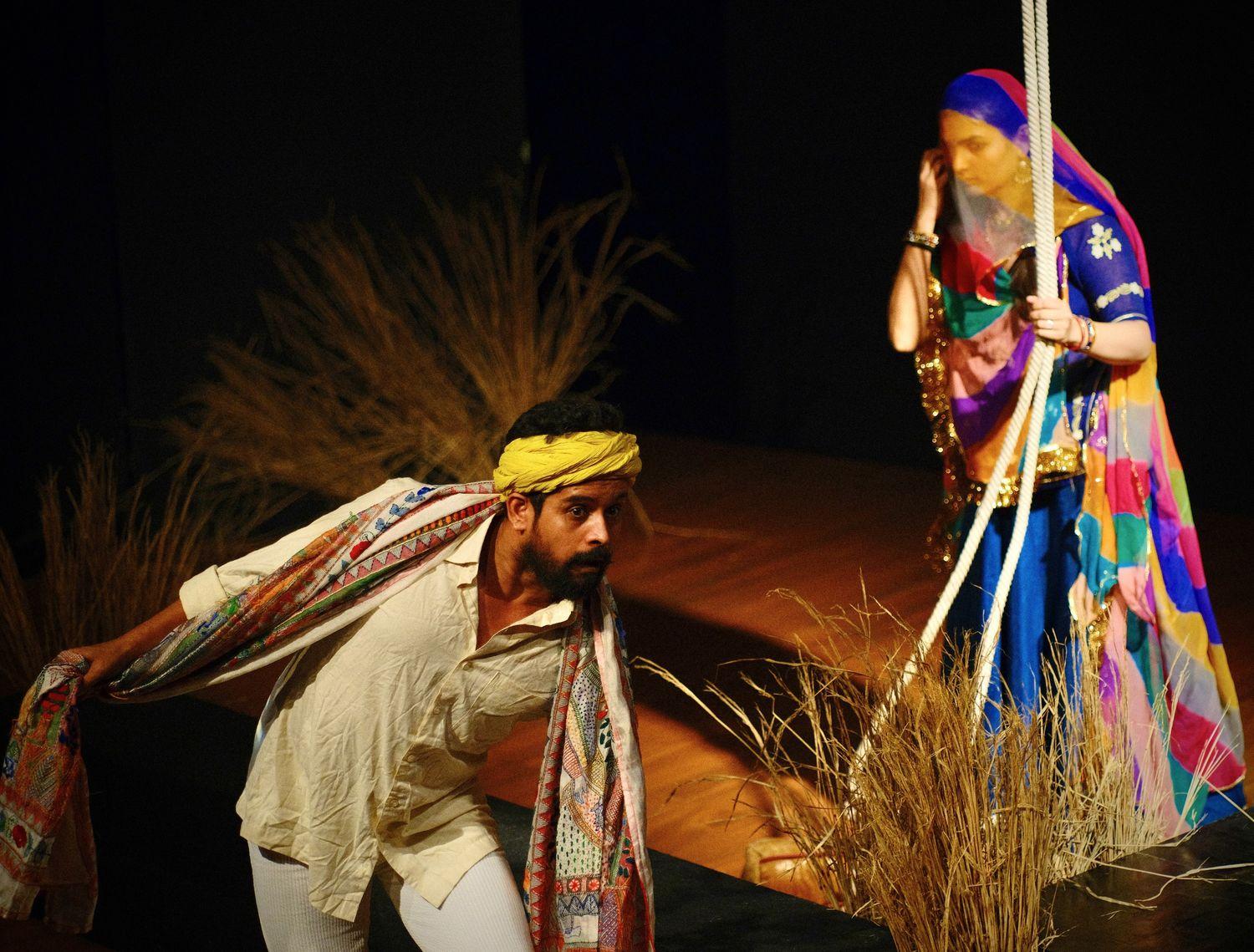
Desert Bloom begins in the desert with women laboring as a young girl experiences her first menstruation. A spirited young girl named Saroj befriends a Behrupia, crossing conservative boundaries. At the village well, water-bearing women await Lajwanti, whose veil reaches her navel as a symbol of modesty. The women sing, dance, and briefly remove their veils, except for Lajwanti. When they lift her veil, her beauty prompts a conversation about female desire, vanity, and freedom. Their attention shifts to the distant Kabootarwala, hinting at repressed longing. Saroj replaces her school book with an adult novel, awakening new curiosities, and later shares an innocent touch with Behrupia during his rehearsals. Village women discover this connection, making Lajwanti the target of gossip. Lajwanti defiantly vows to fetch water alone.
Later, Lajwanti meets the Kabootarwala, who remains indifferent. Unaccustomed to indifference, she is unsettled, dreams of him that night, and later probes Saroj about him. Meanwhile, Behrupia performs a mythological story of Ahilya, Indra, and Maharishi Gautam, with Saroj playing Ahilya. The act disturbs Lajwanti, who removes her veil and later asks Saroj to take her to the Kabootarwala's birdhouse, where she confronts him only to find his world revolves around his pigeons. Saroj pleads her innocence to her mother, while Behrupia reveals that villagers attacked him and burned his ancestral book and props because they were offended by his performance. Overhearing this reflection on a desert where tenderness has no place, Lajwanti later meets the Kabootarwala at the well again. After learning he plans to reunite with his female pigeon, she challenges him about his visits. In the end, the women gather at the well, and Lajwanti joins them, wipes her face, and removes her veil in a quiet gesture of emancipation.
Director
Mahadev Singh Lakhawat is a National School of Drama alumnus who has directed plays including D-class, Aladdin in Mumbai, Kala Khatta, An evening with Chekhov, and Muavze. His writing includes Muktibodh, Yaaro ka Tamasha, and Main Bhi Bachhan.
Director’s Note
Mahadev Singh Lakhawat grew up in the small village of Rendri in the Pali district of Rajasthan, where he observed women living behind the ghoonghat with hidden identities and normalized silences. Experiences at the National School of Drama led him to question social systems and internalized masculinity. Reading Vijaydan Detha’s Lajvanti reminded him of the women in ghoonghats he had seen in his youth, awakening a desire to stage the work focusing on human presence and lived experience. Desert Bloom explores the radical idea of acknowledging and expressing women's desires as truths and celebrations rather than threats.
Source: National School of Drama — Bharat Rang Mahotsav



Leave a comment
Your email address will not be published. Required fields are marked *