

Hum Bihar Mein Chunav Ladh Rahe Hain: A Satirical Solo Play Exploring Indian Politics
The latest entertainment stories, perspectives and exclusive updates.
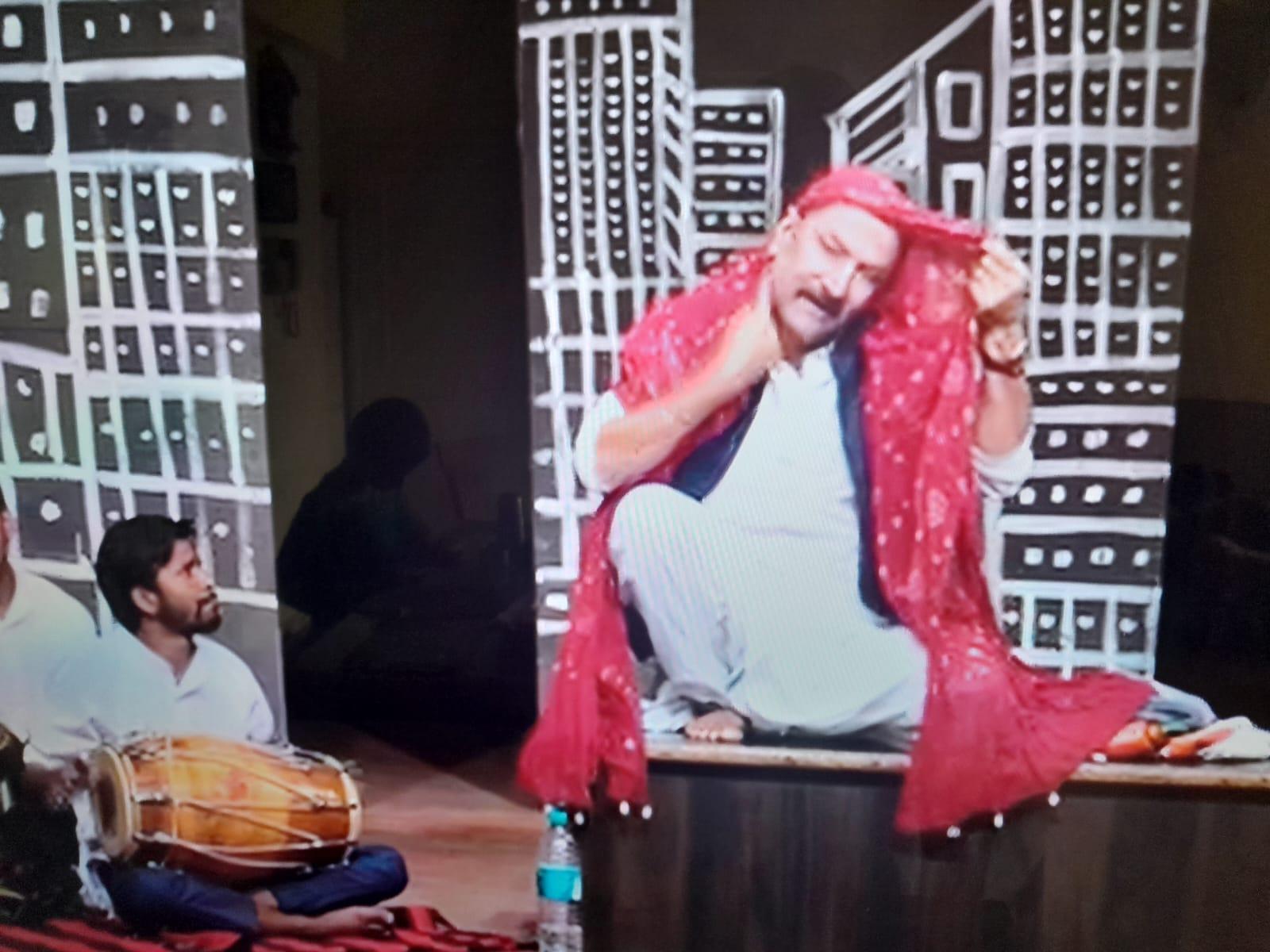
Hum Bihar Mein Chunav Ladh Rahe Hain: A Satirical Solo Play Exploring Indian Politics
Hum Bihar Mein Chunav Ladh Rahe Hain is a satirical solo play inspired by Harishankar Parsai, exploring the absurdities of Indian politics through folk melodies, physical theatre, and sharp wit.
About the Play
Hum Bihar Mein Chunav Ladh Rahe Hain is a satirical solo play inspired by Harishankar Parsai’s classic work, exploring the decay and absurdities of Indian politics. Through sharp wit, folk melodies, and physical theatre, the performer narrates the journey of a writer and God who descend to Bihar to contest elections.
As they encounter people of different social and political backgrounds, the play humorously reveals how caste, class, and opportunism dominate the political landscape, leaving little room for genuine values or reform. Beneath its laughter lies a deep reflection on the loss of faith in democracy and insure moral disillusionment of the common citizen.
A vibrant mix of performance art, satire, and folk theatre, the play holds a mirror to our political reality — reminding audiences that the true reform of society begins not in elections, but in conscience.
Director
The director is a graduate of the National School of Drama (NSD), who further honed skills at the Film and Television Institute of India (FTII) and later at the Central School of Speech and Drama, London, through a Charles Wallace India Trust fellowship.
Performances include numerous productions by renowned directors and over 921 solo performances of Hum Bihar Mein Chunav Ladh Rahe Hain across India and abroad. As a director, more than 42 plays have been staged, including Ghasiram Kotwal, Raag Darbari, Aadhe Adhoore, Romeo & Juliet, and An Accidental Death of an Anarchist.
Theatre workshops have been conducted nationwide, children's plays written and directed, and a position held as a lecturer in Acting, Voice, and Speech for the NSD Extension Program. The play Suryamukh was featured in the Best Plays of the Year Festival by Sahitya Kala Parishad, and works are regular highlights of Bharat Rang Mahotsav.
Writer
Harishankar Parsai (1924–1995) was one of modern Hindi literature’s most celebrated satirists and humorists, known for his sharp wit and unflinching social commentary. Born in Jamani village near Itarsi, Madhya Pradesh, an M.A. in Hindi was earned from Nagpur University before dedicating life entirely to writing. Parsai’s works, marked by simplicity and depth, explored human nature, hypocrisy, and societal values through humor and satire. The literary magazine Vasudha was founded, and the popular newspaper column Poochhiye Parsai Se was written. In 1982, the Sahitya Akademi Award was received for the acclaimed satire Viklaang Shraddha Ka Daur, cementing a legacy as a voice of fearless truth and timeless relevance.
Director’s Note
Hum Bihar Mein Chunav Ladh Rahe Hain is more than a political satire — it’s a mirror reflecting the nation’s moral and social fabric. Inspired by Harishankar Parsai’s sharp wit and fearless insight, the play unveils the chaos, irony, and helplessness that define Indian politics.
As a director, the attraction was to its timeless message — where hope and despair coexist, and where even God and the writer must contest elections to seek truth and integrity. This idea, both absurd and profound, highlights an ongoing struggle to find meaning in a world steeped in cynicism.
Blending folk music, physical theatre, and humor, the solo performance moves effortlessly between laughter and introspection. Each performance urges the audience to question not just politics, but themselves — reminding everyone of personal elections fought between truth and deception, action and silence.
Group
Manch has performed over 960 shows of Harishankar Parsai’s acclaimed political satire Hum Bihar Mein Chunav Ladh Rahe Hain. Major productions include Renu Ke Rang, Raag Darbari, Of Mice and Men, Sakharam Binder, Janch Padtal, Godan, and Aadhe Adhure.
Over the years, Manch has nurtured several notable artists such as Pankaj Tripathi, Randhir Kumar, Punj Prakash, Asmita Sharma, Sunil Bihari, Hemant Jha, and Late Shashi Bhushan, among many others.
Source: National School of Drama — Bharat Rang Mahotsav



Leave a comment
Your email address will not be published. Required fields are marked *